

|
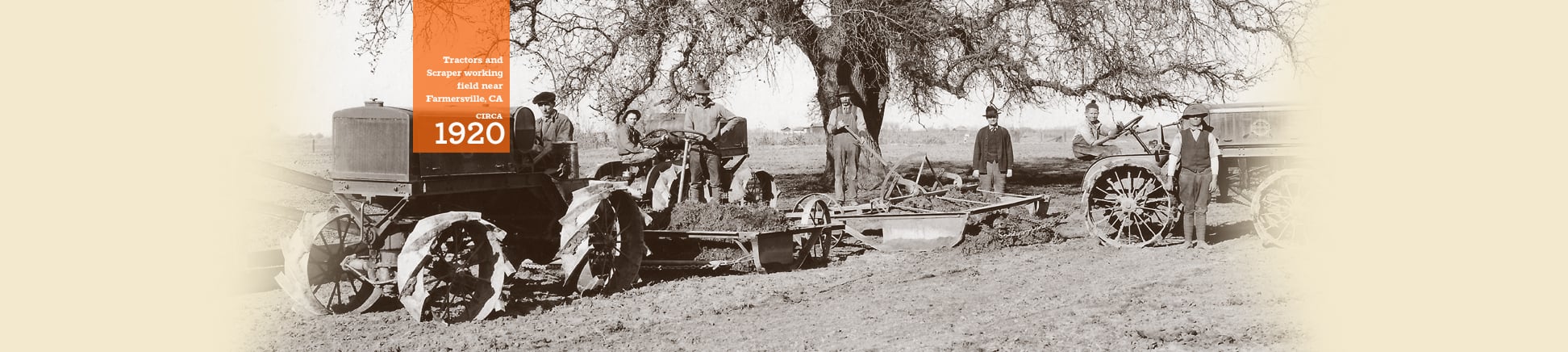
Promoting interest in the history of Tulare County and preserving the heritage of our area for future generations ~ |
|||
|
|
|||
|
History of Farm Labor & Agriculture Museum By Delora Buckman, TCHS President {Los Tulares, December 2009, #247} It was a lovely evening in a beautiful setting. More than 400 invited guests gathered under a starry sky, among majestic oak trees in historic Mooney Grove Park on November 5, 2009 to celebrate the dedication of the Tulare County History of Farm Labor & Agriculture Museum. There was music, wine tasting and an international buffet dinner that included ethnic food specialties from Armenia, Asia, Mexico and Tulare County. Guests were in awe of the greatness and beauty of the Museum building and I was asked by many people if we would get to go inside. The temperature had dipped and there was a chill in the air. After much anticipation, County Supervisor Chairman Phil Cox announced that the program would begin. The crowd gathered around the Museum entrance and on the bridge while listening to drumming by the Tule River Painted Rock Singers. A spiritual and melodious Native American blessing was given. Flags of the United States and of California were brought forward and across the bridge by the La Sierra Military Academy. Visalia Mayor Jesus Gamboa welcomed the guests, followed by short speeches by Connie Conway, Assemblywoman, 34th Assembly District, Jim Vidak, Superintendent of Tulare County Office of Education, Leslie E. Stark, Vice President of Southern California Edison, Delora Buckman, President of the Tulare County Historical Society, and Mike Chrisman, California Secretary for Natural Resources. The protocol throughout the ceremony was impeccable. With much excitement and anticipation, the official ribbon cutting custom was assisted by the Visalia and Tulare Kings Hispanic Chambers of Commerce. Cameras flashed, the doors were unlocked and the Tulare County Museum of Farm Labor & Agriculture was officially opened. Guests entered with enthusiasm and were awed by the vastness, the large pieces of equipment, the high tech learning center, the interactive displays, the banners, and the gift shop. I think the contrast between the high tech learning center and interactive displays and the historical artifacts is unique and impressive. This evening’s visitors were the very first official visitors to the Museum and they observed, spoke, reminisced, and smiled with approval. Due to unavoidable building delays, the installation of displays is far from complete. The installation will be ongoing for weeks and exhibits and artifacts will continue to bring excitement throughout the months and years. I encourage you to visit often. The Museum will open to the public December 17th. The opening and reception for the Armenian display will be Saturday, December 19th . As you visit I hope you will imagine the fabulous displays when the installation is complete. Imagine how this Museum will create improved quality of life for residents of our communities. Imagine how we will be inspired by the people who were here before us. Imagine the thousands of school children who will be delighted when they visit. Imagine the multi generational visits and bonding when grandparents share experiences. Imagine the possibilities of personal involvement—docents are needed and training is available. Imagine the possibilities of financial donations and sponsorship. Imagine that this Museum will become a Tulare County icon. |
|||
|
|
|||
|
THE SOCIETY In 1922, a group of people interested in the historical preservation of the original Tulare County organized Tulare County Historical Society. Much of the credit for that project must be attributed to Miss Gretchen Flower, a long time Tulare County Librarian at that time, and to George W. Stewart, who was known as the "Father of Sequoia National Park." For a time the Society prospered, but interest and membership gradually declined. The Society was revived in 1943 and the group then identified three general goals. 1) Preservation of the past of original Tulare County 2) Construction of a museum, and 3) Observation of the Centennials of both Tulare County and Visalia. Adolph Sweet was elected the first President of the Tulare County Historical Society in October 1944. Several hundred people from all parts of the county attended the meeting in the old Visalia City Auditorium. Today, the Society has accomplished its original goals set forth in 1943. We continue promoting interest in the history of Tulare County and preserving the heritage of our area for future generations! |
TULARE COUNTY In California's San Joaquin Valley
Alpaugh - Badger - California Hot Springs - Camp Nelson - Corcoran - Cutler - Dinuba - Ducor - Earlimart - Exeter - Farmersville - Goshen - Ivanhoe - Kaweah - Lemon Cove - Lindsay - Miramonte - Orosi - Pixley - Porterville - Posey - Richgrove - Springville - Strathmore - Sultana - Terra Bella - Three Rivers - Tipton - Traver - Tulare - Visalia - Waukena - Woodlake - Yettem
|
||
|
|
|||
|
Visit Other Tulare County Websites Alta District Historical Society Historic Happenings - A Visalia History Forum Three Rivers Historical Society
|
|||
|
|||